English

Our English curriculum has been mapped out by our English Lead, Mrs. Bethany Chattey.  

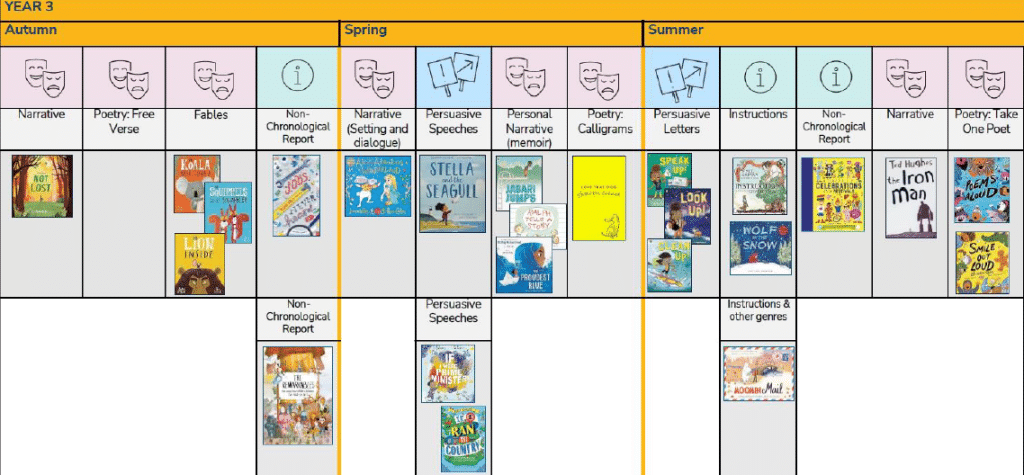
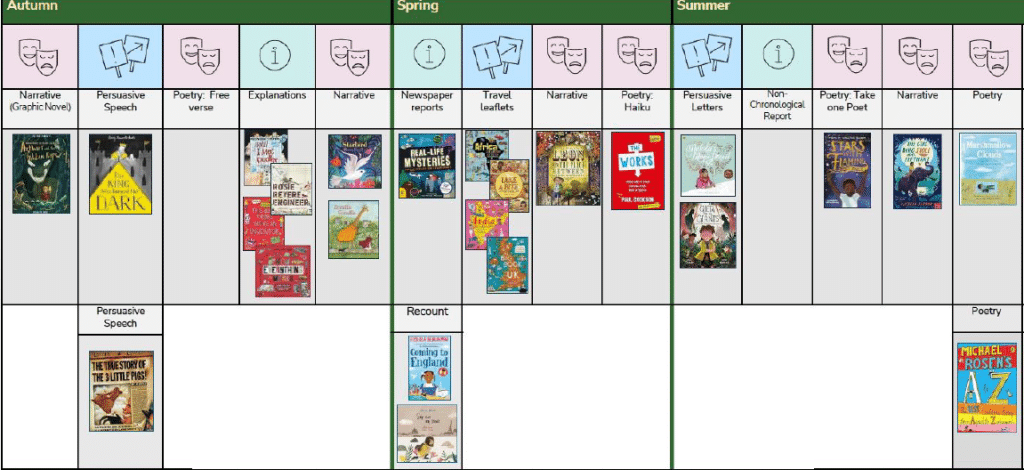
We follow a rolling programme of English units and use the alternative text suggestions so that if a class have covered explanation texts in Year One and they repeat this unit in Year Two, it is with different text choices. 

In September 2025, Herts for Learning will publish mixed age planning which the school will then use. 

Developing Confident and Inspired Writers at Pirton School through our English Curriculum

“Through studying literature, pupils’ eyes are opened to the human experience; they explore meaning and ambiguity as well as the beauty and power of language”. Research series: English, Ofsted July 2022 

At Pirton School, we are passionate about nurturing both children’s and teachers’ knowledge, motivation, and confidence in the craft of writing.

Starting with our youngest learners in Reception, we carefully choose a range of high-quality texts to captivate the children and inspire them to mark make, write, draw and talk about what they have read and heard. We use Drawing Club to teach new and exciting vocabulary and to develop a passion for high quality literature and early writing.

We use HFL’s ESSENTIALWRITING curriculum units to support our delivery of the National Curriculum as it is an ambitious and progressive writing scheme, designed to engage and inspire young writers. Rooted in high-quality literature, it equips teachers with the subject knowledge, pedagogical tools, and strategies needed to help children write with purpose and for authentic audiences.

Designed for Years 1-6, the ESSENTIALWRITING curriculum provides teachers with the resources and expertise to effectively guide children in developing their writing skills. Through this approach, children not only learn to write with clarity and creativity but also develop a strong sense of purpose and identity as writers. We empower our pupils to see themselves as authors, capable of expressing their ideas with confidence and skill.

At Pirton School, we believe that writing is more than just a skill—it’s a powerful tool for communication, creativity, and self-expression.

Phonics at Pirton School

Introduction to Bug Club Phonics

We are committed to delivering high-quality, rigorous, and systematic phonics teaching that meets the needs of all children. Through our teaching of reading and phonics, both set within a broad and rich language curriculum, we aim to develop each child so that they are able to read with fluency as well as developing a love of reading that will stay with them all their lives. We want all pupils to benefit from a consistent and systematic approach to the teaching of phonics from entry to school in order that they may have the best start possible in reading and writing. 

Teaching and Learning:
Phonics teaching is provided daily in the Foundation Stage and Key Stage 1. The phonics programme used is Bug Club Phonics. Bug Club Phonics is the dedicated phonics strand of Bug Club. The programme is a balanced approach to the teaching of reading using systematic synthetic phonics. It simultaneously teaches the segmentation of words for spelling and develops phonemic awareness skills.

Robins - Year One

Swifts - Year Two

Kestrels - Year Three

Falcons - Year Four/Five

Owls - Year Five/Six

Our Writing Curriculum

At Pirton, we use the HFL’s Essential Writing Scheme to help us deliver the National Curriculum aims and objectives for Writing in English. In Reception the children take part in Drawing Club where we take one key text each week and explore the characters and settings, and answer ‘what if’ questions through our writing. In Years 1-6 our children are then taught using Essential Writing to implement the curriculum objectives. The books featured on our Pirton Writing River are the texts we use to deliver our English Curriculum and ensure that we have a diverse, exciting and interesting range of texts to support our children’s writing.

Guided Reading

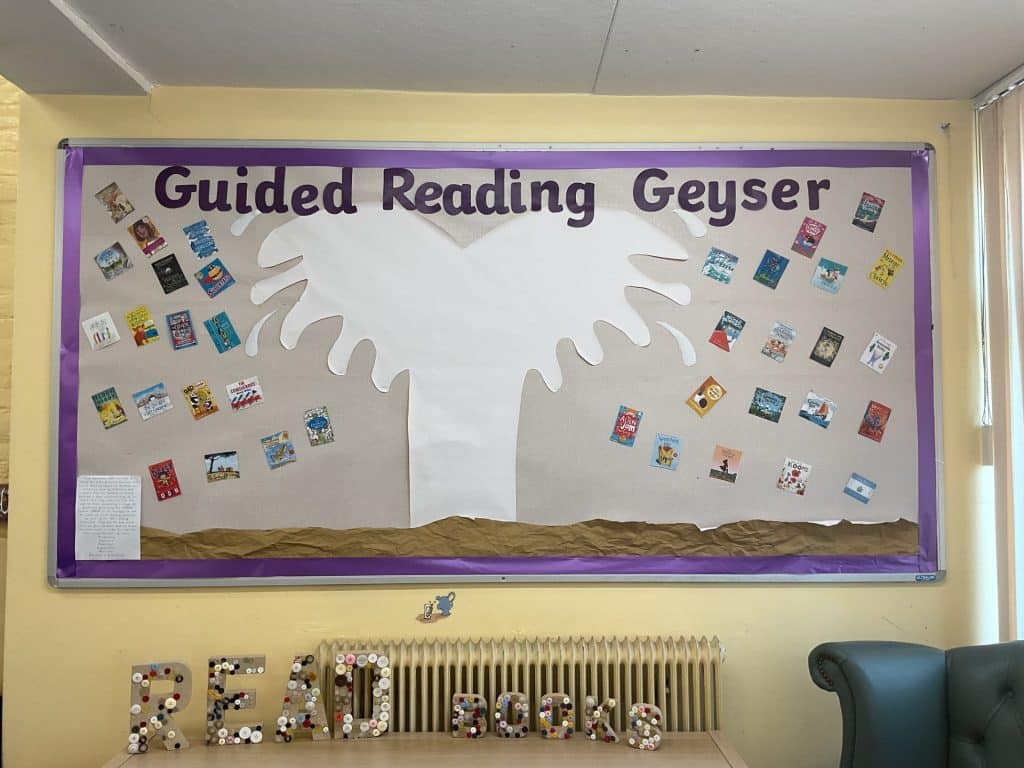
From September 2025, we will be using the texts featured here on our Guided Reading Geyser to develop our children’s love of literature and ensure that all children at Pirton develop a deep understanding of the texts that they read and that are read to them, answering a range of questions following the VIPERS format. VIPERS is an acronym to aid the recall of the 6 reading domains as part of the UK’s reading curriculum.  They are the key areas which we feel children need to know and understand in order to improve their comprehension of texts:

Vocabulary

Inference

Prediction

Explanation

Retrieval

Sequence or Summarise

Handwriting at Pirton